


How to Submit?
Please send your photos and story via email.
PS: Deadline for the first phase of submissions: June 30, 2026
Send Email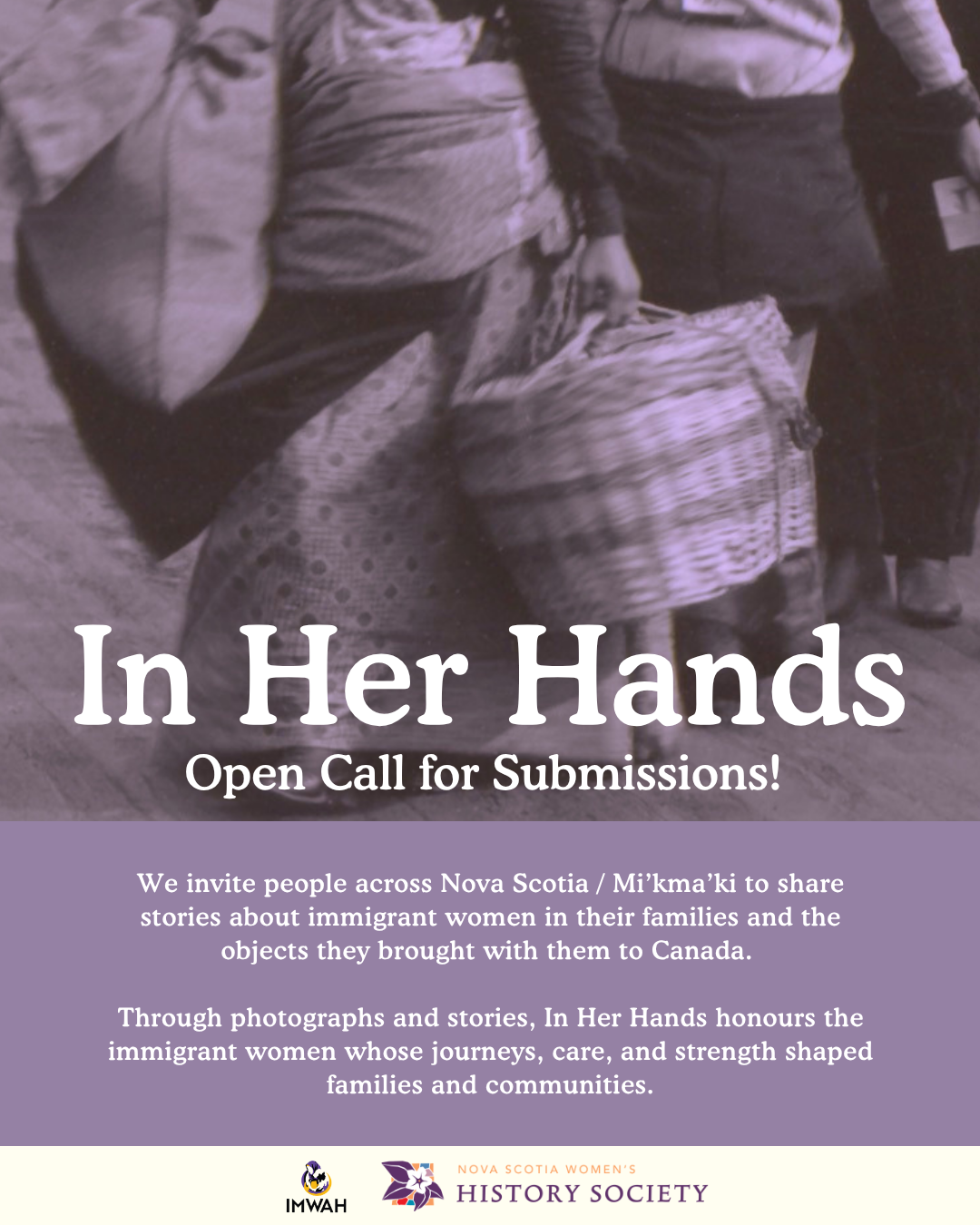

In Her Hands is a storytelling project that honours immigrant women, their journeys to Canada, and the meaningful objects they carried with them.
We are looking for stories about a woman in your family who immigrated to Canada and brought with her an object that has been lovingly used and preserved by her family. The object can be an everyday item with a practical use, or something with special meaning or sentimental value.
Through one meaningful object, this project invites people to share the story of her strength, care, and the work she did to hold family and culture together — stories that are often left out of history.
When women immigrate, they often carry more than what fits inside a suitcase.
They carry memories, language, culture, recipes, traditions, family responsibilities, hopes, and love. Sometimes, these stories live inside everyday objects: a cooking tool, a piece of clothing, jewelry, a book, a religious or cultural item, a family photo, a handmade object, or something that reminds them of home.
In Her Hands creates a space to honour these stories through meaningful objects. Participants are invited to share two photos of the object in someone’s hands, along with a short story about the woman, the object, and why it matters.
Many immigrant women carry stories that are not always seen, recorded, or remembered publicly.
Their journeys often include courage, care, sacrifice, hard work, resilience, and love. They may be the people who helped keep families together, passed down culture, supported children and elders, built new homes, and created belonging in unfamiliar places.
In Her Hands is a way to pause and honour those stories.
People of all gender identities and from all generations of immigrant families are encouraged to participate by sharing a story about an important woman in their family.
Please also let us know how you would like us to credit the woman in the photos and story.
Your story does not need to be long or professionally written. What matters most is the meaning behind the object and the story it carries.
Please send your photos and story to: nina.zhang@imwah.org
If you have any questions, please reach out to us at the same email.
Deadline for the first phase of submissions: June 30, 2026
We want this project to feel safe, respectful, and meaningful.
You only need to share what feels comfortable. You do not need to share painful or personal details. You can choose how much of the story you want to tell.
We will only share names, photos, and stories with permission.
In Her Hands is a celebration of the women who carried culture, memory, care, and strength across generations.
Through this project, we honour what they brought with them, what they built here, and what they continue to pass on.
Please send your photos and story via email.
PS: Deadline for the first phase of submissions: June 30, 2026
Send EmailIMWAH acknowledges that our work takes place in Mi'kma'ki, the traditional and unceded territory of the Mi'kmaq people
