


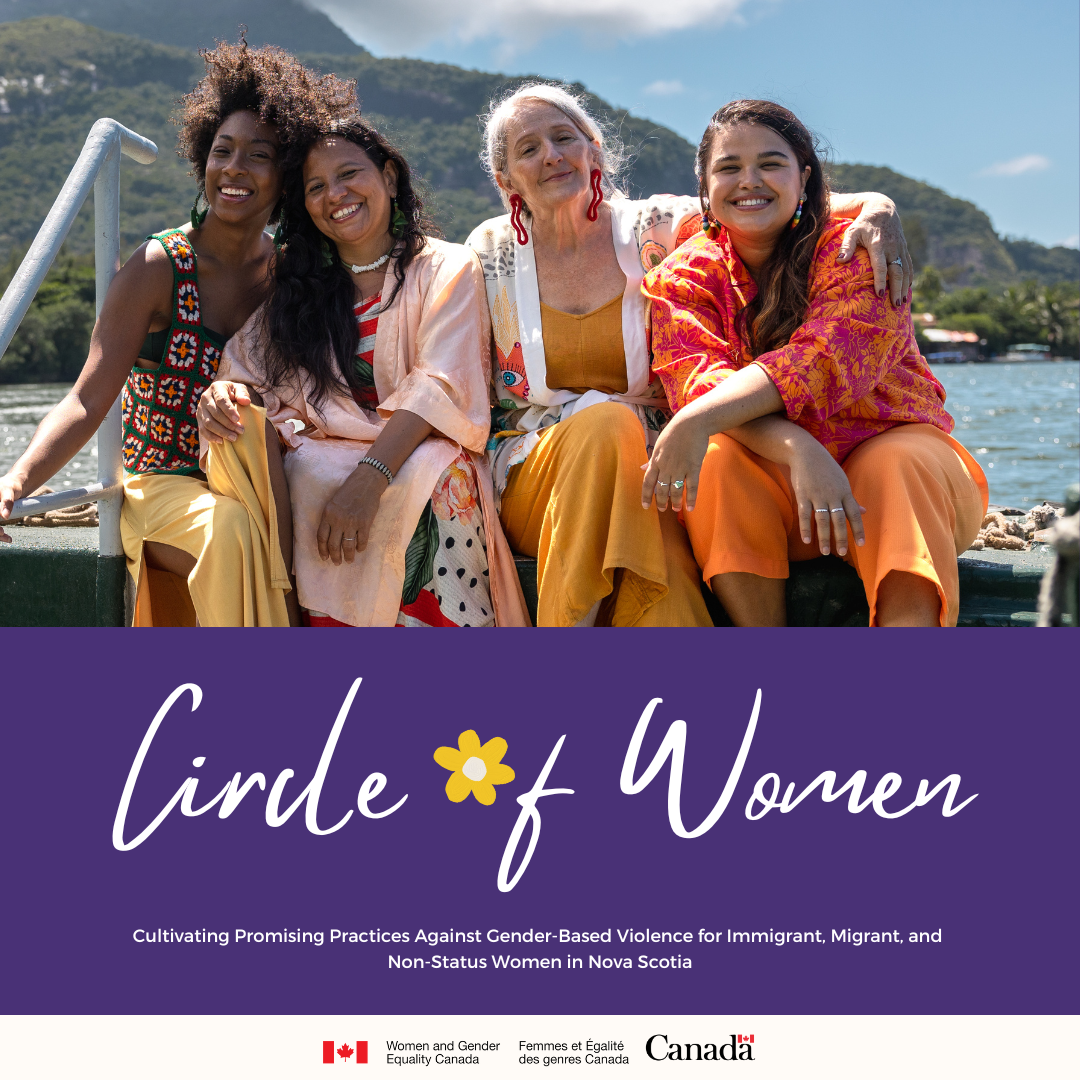

The Circle of Women Project is a community-based initiative by the Immigrant Migrant Women’s Association of Halifax (IMWAH) focused on reducing and addressing gender-based violence by supporting immigrant and migrant women across Nova Scotia.
The project recognizes that immigrant and migrant women may face unique challenges related to safety, family, employment, housing, legal systems, money, mental health, language, isolation, and navigating services in a new community.
Through a survivor-centred, trauma-informed, and culturally responsive approach, Circle of Women creates spaces where women can connect, learn, build confidence, access information, and make informed decisions about their safety and wellbeing.
From 2024 to 2025, the Circle of Women Project brought together immigrant and migrant women, service providers, community organizations, employers, facilitators, volunteers, and partners across Nova Scotia.
Over these two years, the project supported community connection, learning, and collaboration through workshops, peer support groups, conversation groups, information sessions, advisory meetings, and resource development.
The 2024/2025 phases of the project were a success, and we are deeply grateful to everyone who helped bring this work to life.
This includes the women who participated, shared ideas, asked questions, joined events, and helped shape the direction of the project. It also includes the service providers, employers, community partners, facilitators, volunteers, and advisory members who contributed their time, knowledge, and care.
Together, we built meaningful spaces for immigrant and migrant women to connect, learn, and feel supported.
The 2024/2025 phases focused on three key groups: immigrant and migrant women, service providers and community partners, and employers.
Circle of Women created welcoming spaces for immigrant and migrant women to build community, access information, and strengthen confidence.
Activities included peer support sessions, workshops, English Conversation Groups, community events, and information sessions on topics such as safety, legal rights, health and wellness, housing, settlement, family support, financial wellbeing, and community connection.
These sessions were designed to be accessible, welcoming, and responsive to the lived experiences of immigrant and migrant women.
The project also worked with service providers and community organizations in the anti-violence, settlement, health, legal, and community sectors.
Through meetings, discussions, advisory groups, and knowledge-sharing spaces, Circle of Women helped strengthen understanding of the barriers immigrant and migrant women face when accessing support.
This work supported stronger collaboration, better referral pathways, and more culturally responsive approaches to service delivery.
Circle of Women also engaged employers to better understand how workplaces can be safer and more supportive for immigrant and migrant women.
These conversations helped inform resources and tools focused on safer, more inclusive workplaces, with attention to gender-based violence, workplace safety, and the experiences of newcomer staff.
The Circle of Women Advisory Group played an important role in guiding the project.
The advisory group brought together immigrant and migrant women, service providers, community partners, and people with different areas of knowledge and experience.
Their feedback helped ensure that the project remained connected to community needs, transparent in its approach, and responsive to the realities of women across Nova Scotia.
One of the most meaningful parts of the Circle of Women Project has been the English Conversation Groups.
These groups created a welcoming space for immigrant and migrant women to practice English, build confidence, make friendships, and feel more connected to community.
The groups were offered both virtually and in person, helping women participate in a way that worked for their schedules and comfort levels.
Although this activity was part of the 2024/2025 project phase, IMWAH recognizes the deep value of these groups and is working to sustain them through volunteers, partnerships, and community support.
As part of the 2024/2025 phases, Circle of Women supported the creation of resources and tools to help immigrant and migrant women, service providers, employers, and community members better understand safety, support, and gender-based violence prevention.
These resources reflect what we learned through conversations, workshops, advisory meetings, and community engagement.
They are part of the lasting impact of the project and will continue to support learning and awareness beyond the original project timeline.
The 2024/2025 phases of the Circle of Women Project were made possible with funding from Women and Gender Equality Canada (WAGE).
We are deeply grateful for WAGE’s support, which allowed IMWAH to create spaces for immigrant and migrant women to connect, learn, access information, and build community across Nova Scotia.
This funding supported workshops, conversation groups, advisory meetings, community engagement, resource development, and partnerships focused on gender-based violence prevention and response. Through this support, the project was able to reach women, service providers, employers, and community partners in meaningful and lasting ways.
We are excited to share that the Circle of Women Project will continue through an upcoming extension.
The extension will build on the strong foundation created during the 2024/2025 phases and continue supporting immigrant and migrant women, service providers, and community partners across Nova Scotia.
More information about the next phase of Circle of Women will be shared soon.
We look forward to continuing this work, deepening partnerships, and creating more spaces where immigrant and migrant women can access support, build connection, and feel part of a strong community.
Thank you to everyone who helped make the 2024/2025 phases of Circle of Women a success.
Your participation, care, knowledge, and trust helped create spaces of learning, connection, and support. We are proud of what was built together and excited for what comes next.
IMWAH acknowledges that our work takes place in Mi'kma'ki, the traditional and unceded territory of the Mi'kmaq people

